- Tab Title 1
- Tab Title 2
- Tab Title 3
- chlorine dioxide in water treatment
- chlorine dioxide in final water disinfection
- chlorine dioxide in sewage disinfection
- chlorine dioxide in the disinfection of hospital wastewater
- chlorine dioxide in disinfection in the food industry
- chlorine dioxide in surface water disinfection
- chlorine dioxide in tank disinfection
- chlorine dioxide - cooling water treatment, biofilm
- Chlorine Dioxide CIO2
- Tab Title 2
- Tab Title 3
- chlorine dioxide in water treatment
- chlorine dioxide in final water disinfection
- chlorine dioxide in sewage disinfection
- chlorine dioxide in the disinfection of hospital wastewater
- chlorine dioxide in disinfection in the food industry
- chlorine dioxide in surface water disinfection
- chlorine dioxide in tank disinfection
- chlorine dioxide - cooling water treatment, biofilm
Tutorials
Water
Coliform bacteria in drinking water
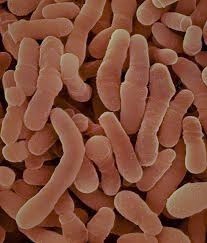
Bacteria Escherichia coli (E. coli) belong to the family of bacteria Enterobacteriaceae. They are motile, ciliated gram-negative rods measuring 0.5-3.0 µ. These bacteria live in the human large intestine as well as in the digestive tract of warm-blooded animals, and their numbers in fresh feces can be up to 109 cells per gram. In the group of bacteria cola we distinguish two basic types of bacteria: the fecal type Escherichia coli and earth type Aerobacter aerogenes.
Infections in humans are caused only by strains of the strictly pathogenic serotype E.coli, Shigella, Citrobacter, Yersinia, KES group, Proteus.
Infection caused by E. coli mainly affects the digestive system, causes diarrhea and vomiting mainly in people with weakened immune systems as well as in young children and the elderly. E. coli strains causing infections outside the digestive system, the so-called ExPEC (Extraintestinal Pathogenic Escherichia coli) constitute only 3% serotypes in the population E.coli and can cause pneumonia, ear infection, and bladder infection in humans.
Most serotypes Escherichia coli faecal type is not pathogenic, These bacteria are indicator organisms used to assess the sanitary quality of water intended for drinking and industrial purposes. They inform about contamination with sewage, in which other pathogenic bacteria may also be present, e.g. fecal enterococci, Clostridium perfringens. In addition, water contaminated with feces may contain worms and parasite eggs, such as lamblia, human roundworm, and pinworms. Bacteria E.coli and groups colawas chosen as an indicator organism for the sanitary protection of water intakes and tap water because it is detected by simple methods, does not produce spores, does not reproduce in water and soil, lives longer than pathogenic bacteria and is a physiological bacterial flora of the digestive system. Bacteria E.coli and groups cola they always occur in untreated sewage as well as treated sewage (flowing from sewage treatment plants) where disinfection is not carried out.
Legal requirements
Escherichia coli belongs to the "coliform group" just like Citrobacter , Enterobacter and Klebsiella and the remaining 40 genera of the Proteobacteriae class. Group bacterial count cola it is the number of bacterial colonies of the group cola in 100 ml of tested water. In accordance with the currently applicable Regulation of the Minister of Health of 13 November 2015, item 1989 "On the quality of water intended for human consumption", according to Annex No. 1, bacteria Escherichia coli, groups cola and Fecal Enterococci must not be present in drinking water.
Causes of bacteria in water
As previously mentioned, this bacterium tells us that drinking water has been contaminated with sewage. Possible contamination sites include:
Water intake
In the case of deep wells, contamination may occur as a result of the penetration of groundwater containing sewage (effluent from treatment plants, leaking septic tanks, animal excrements, fertilization of fields, etc.). Sewage may penetrate through the well casing or disturbed impermeable soil layers. Contamination of deep wells usually occurs during periods of heavy precipitation causing an increase in the level of groundwater.
Water treatment plant
Contamination may occur as a result of possible contamination of the filter bed, e.g. during its replacement. A probable cause may also be the presence of a dead animal or bird in the treated or raw water tank (in the case of systems with open aeration). In such a case, it is usually necessary to check all openings, such as hatches, ventilation grilles, as well as the tightness of the upper part of the tank.
Water supply network
In this case, we are talking about "secondary contamination". Such contamination occurs as a result of not maintaining proper cleanliness during the replacement, renovation or repair of pipelines, as well as the lack of ensuring sufficient disinfection after their replacement or repair. A relatively common case is also the introduction of contaminated water into the water supply system by recipients connected to the network, but also having their own water intakes (usually groundwater). The condition of such systems usually leaves much to be desired and any damage to the non-return or anti-contamination valve at a higher pumping pressure will result in the introduction of contaminated water into the public network.
Internal user installation
Its poor condition may be the cause of detection of group B bacteria. cola. In this case, it is difficult to determine the possible cause, because each case must be treated individually, but it should be remembered that if small amounts of bacteria are detected, the cause may also lie in the simple contamination of the taps themselves or the test taps at the outlet from which the tested water sample is taken.
Remedies and procedures
In order to exclude potential health risks for recipients and immediately eliminate water contamination, it is necessary to:
-
inform recipients about the ban on drinking water,
-
determine the source of contamination by testing water from:
-
each well separately
-
treatment plant points (drainage before filters, after filters, after the treated water tank),
-
critical network nodes
-
the recipient's draw-off point where contamination was detected
-
Immediately after sampling and before obtaining the test results (the results will only be available after 72 hours at the earliest), the disinfection systems at the water treatment plant should be turned on, i.e. UV lamps (voluntary installation) and the chemical disinfection system (mandatory installation), such as the dosing of sodium hypochlorite, chlorine dioxide or chlorine gas.
After receiving positive results of microbiological tests of water at previously established control points, it is recommended to maintain further chemical disinfection, remembering that maintaining proper water quality does not involve a compromise between microbiological and chemical purity of water, i.e. the elimination of dangerous bacteria is more important than only temporarily impaired taste of water caused by the presence of chemical disinfectants, which are very quickly decomposed and disappear, and the taste, smell, turbidity and colour of water acceptable to the consumer return.
Devices and systems for combating bacteria
-
UV lamps for water: http://fkvdoxm.cluster100.hosting.ovh.net/woda/lampy-uv/
-
UV lamps for water: http://fkvdoxm.cluster100.hosting.ovh.net/lampy-uv/
Lorem ipsum dolor sit amet, consectetur adipisicing elit. Optio, neque qui velit. Magni dolorum quidem ipsam eligend565656